Amazon has over 1 million robot workers. What’s next for human employees?
The second-largest corporate employer has bet big on robot workers to scale.
Nog geen ander medium dat Zonactu volgt, meldt dit bericht.
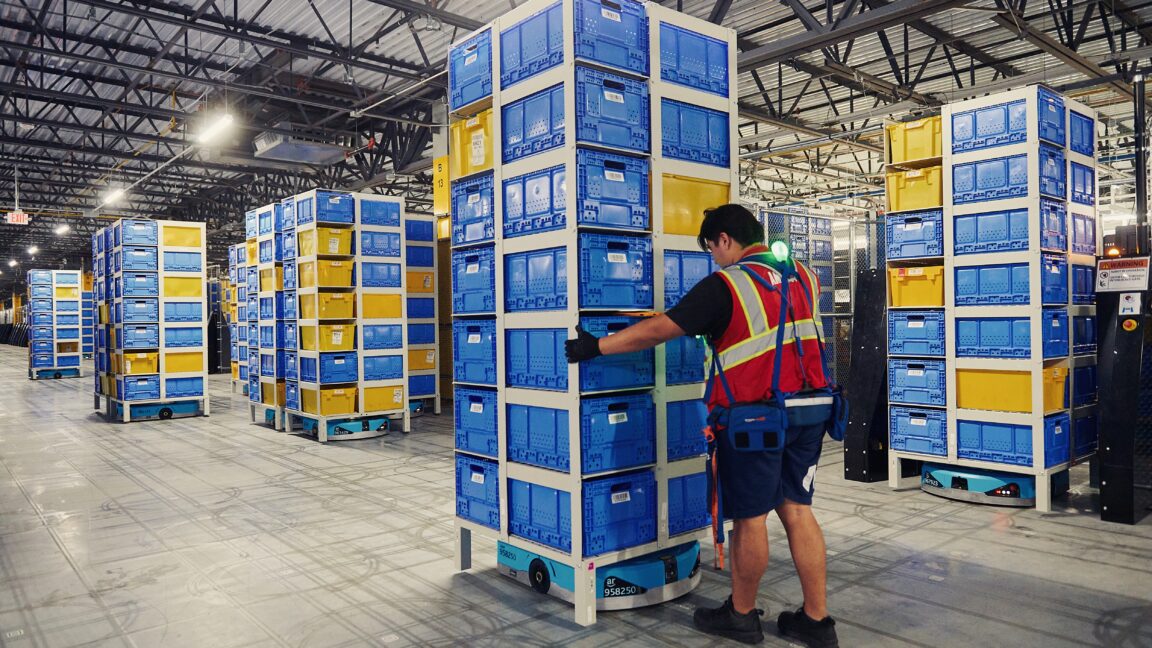
“As we recognize that each of these robotics [developments] can change the nature of work, we’re providing opportunities for our employees to upskill and learn some of these things,” said Dresser at Amazon Robotics. “We’ve actually increased the number of robotic maintenance technicians that we have in the network by over 30 percent, and that is a much higher-skilled, higher-compensated job.”
The company has also described its automation efforts as going hand in hand with a growing business that needs more human employees. “As we’ve deployed robots over the past decade, we’ve seen our operational footprint grow, creating hundreds of thousands of jobs as we expanded our network,” the Amazon spokesperson told Ars.
However, there are apparently internal discussions within Amazon about robots potentially reducing the need to hire humans. In October 2025, The New York Times reported on internal strategy documents suggesting that the robotics push could allow the company to reduce projected hiring needs in the United States by more than 160,000 people by 2027 and 600,000 people by 2033. (An Amazon spokesperson responded at the time by saying the documents reflected the views of just one group inside the company.)
Even as Amazon looks to build out its robotic fleet beyond the million-robot mark, discussions about the company’s workplace safety and working conditions are unlikely to go away. Although just a very small fraction of Amazon’s hundreds of thousands of employees have unionized in the United States, labor unions have “traditionally served a very good role in terms of improving worker safety,” Greenwood said.
“Now, obviously, I understand that firms are not always excited to engage in that conversation, and I can’t say that would solve the problem here,” Greenwood told Ars. “But developing a better relationship between management and labor is usually the best path forward to try to figure out how to reduce these injury rates, which would have benefits for Amazon as well.”
The first Amazon Labor Union that was organized among workers at a warehouse in Staten Island, New York, in April 2022, has been pushing what it describes as a Safety Bill of Rights that outlines changes it would like to see to make their workplace safer. The image that accompanies the document declares: “We are not robots.”