What's been driving Hawaii's lava fountains?
Before the lava fountains started, the ground was expanding by half a meter a day.
Nessun'altra testata seguita da Zonactu riporta ancora questa notizia.
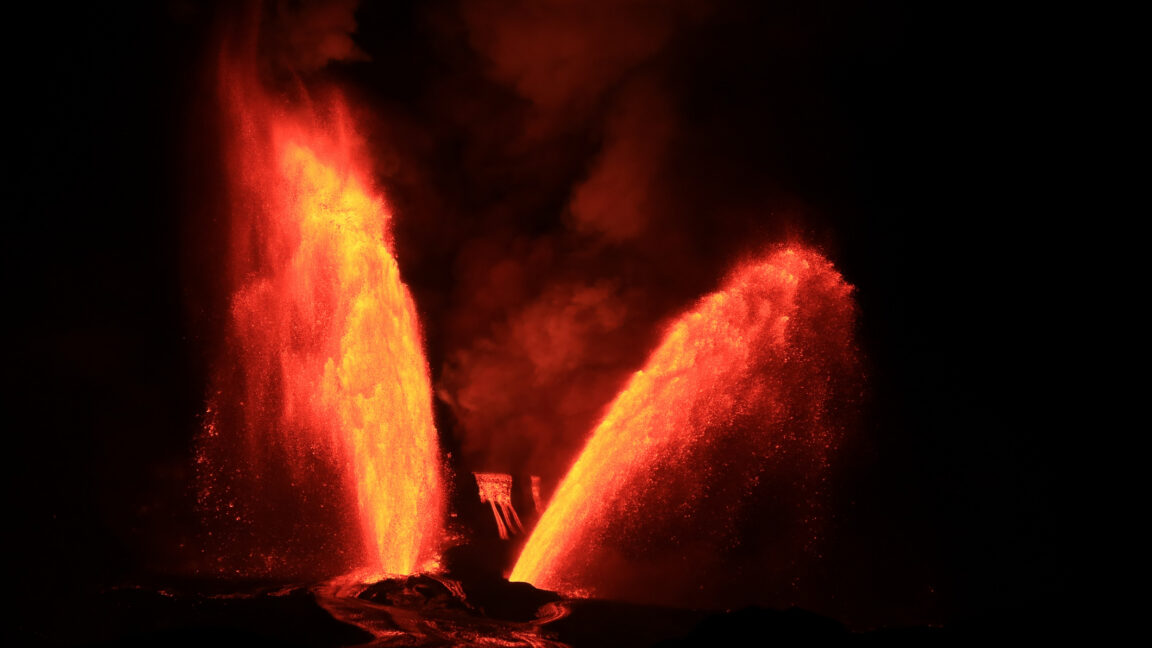
In 2024, a large series of earthquakes accompanied the opening of a vent, and a 900-meter-long fissure opened, sending fountains as high as 160 meters into the sky over the course of 13 hours. Less than a day after that subsided, a second eruption followed. As of last month, 52 additional fountain eruptions had occurred, the most violent of which spewed lava over 400 meters into the air.
Perhaps the most significant finding was that we could predict when a fountaining eruption was likely to happen. Each eruption caused rapid deflation of the summit of Kilauea and was followed by the relatively slow refilling of the Halemaʻumaʻu magma reservoir.
The USGS recognized that consecutive eruptions occurred when the summit tilt reached similar levels. While the precise tilt that was associated with eruptions tended downward over time, the difference between consecutive eruptions was relatively small. This pattern ultimately helped the organization issue alerts when eruptions were likely to occur, which was especially useful because there were no clear seismic signals immediately before fountains restarted.
What have the eruptions told us about the mechanism that drives fountain formation?
One leading idea is that pressure within a magma reservoir keeps water mixed with other materials until it reaches a shallow enough depth to exit as steam. That fragments the magma, which allows it to ascend more rapidly, which allows more steam to escape, and so on until there’s a jet of material near the surface. The alternative posits that things are driven by the release of carbon dioxide from the magma, which forms a magma/gas “foam” at the roof of the magma chamber. Once this reaches a critical point, the gas escapes, driving magma with it until the supply in the magma chamber is exhausted.