Manchester City and PSG’s strange alliance illustrates the biggest problem with modern football
As geopolitical manoeuvring spills into the sport, Miguel Delaney explains why football has been too slow to act on state influence
Nessun'altra testata seguita da Zonactu riporta ancora questa notizia.
Want to bookmark your favourite articles and stories to read or reference later? Start your Independent Membership today.
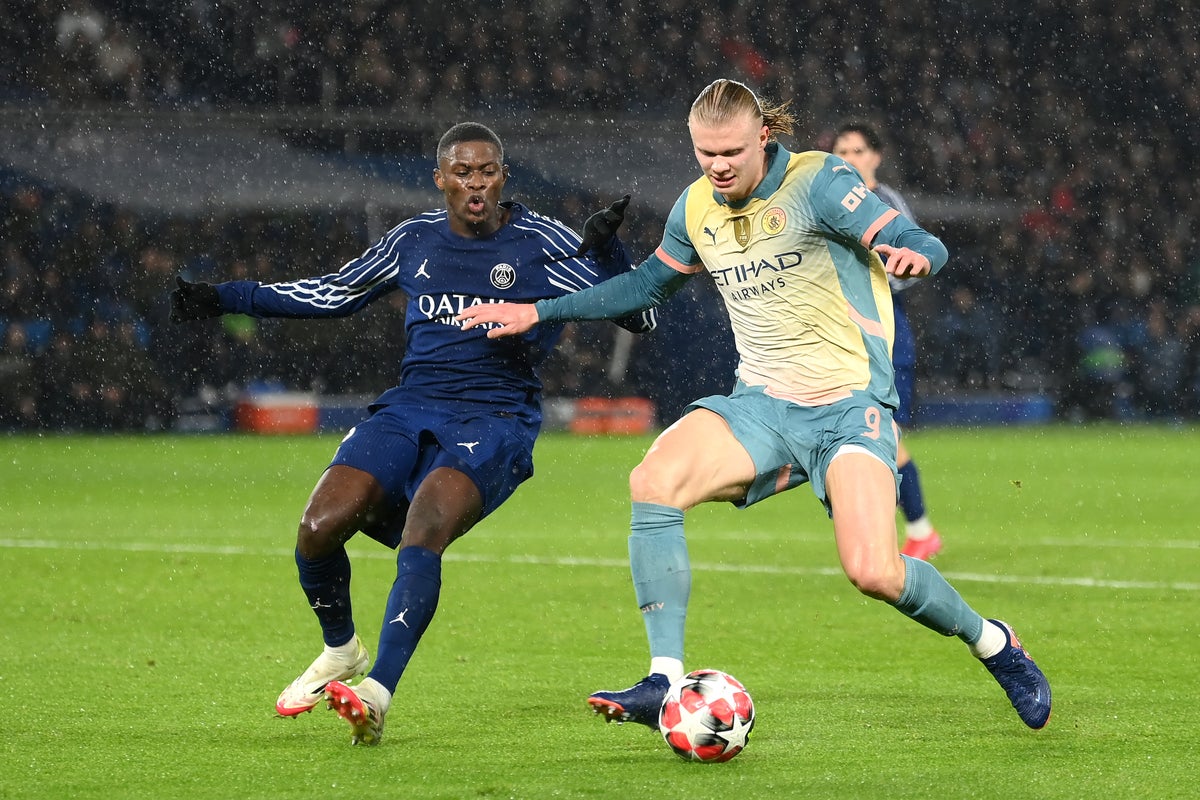
W hen Ferran Soriano welcomes Paris Saint-Germain to the Etihad on Wednesday, it might prove a rare moment where there’s a warm embrace for the Manchester City chief executive in boardrooms. Liverpool didn’t offer that.
Contrast that with two weeks ago, when Paris Saint-Germain president Nasser Al-Khelaifi offered backing to City, speaking in his role as chair of European Football Clubs (EFC) at the body’s general assembly.
“You are using the word ‘cheating’ but, for them, they didn’t cheat,” said Al-Khelaifi, having initially looked irritated at being asked.
He went on to describe Soriano as “very honest”. “We respect him very much.”
It’s unknown which “we” Al Khelaifi was referring to. Perhaps it was the EFC board, which Soriano sits on.
If it was the PSG leadership – and, by extension, the wider Qatari hierarchy – it offers a lot more geopolitical intrigue.
It’s barely a half-decade since these two clubs were meeting in the same competition and there was severe tension, as a consequence of the Gulf blockade. Abu Dhabi had been Saudi Arabia’s key allies in diplomatically isolating Qatar , as part of the never-ending one-upmanship between the region’s royal families.
The politics have since turned, with Abu Dhabi now much further from Saudi, but the same impulses remain.
They drove these states to purchase clubs in the first place, amid wider geopolitical aims. And it was throughout this time that many in football – as well as in media – warned of the considerable risks of state ownership.
This was usually waved away as some overstated abstract concern, amid orchestral football from Pep Guardiola’s team or the soap opera of PSG. In other words, the softer elements of soft power.
Well, now, every single one of those warnings has come true. We’re now in that world, and there are few better illustrations than Wednesday’s Champions League fixture at City.
If Sunday’s match at Liverpool showcased one side of the issue , and a club seen to have directly suffered, this very next game in the calendar shows the other: what these states can really do, the influence that can reach.
The geopolitical dimension really shouldn’t be forgotten amid all of the frenzy about the City case’s more immediate issues.
Because, while Abu Dhabi’s “asset” have subjected the game to complete chaos, Qatar’s have allowed the state ever greater control and influence. That can be witnessed in Al-Khelaifi’s very role at the top of EFC, a body now comparable to Fifa or Uefa , with the promise of more to come.
It’s why the entire City case, coming so soon after the Fifa crisis , is really just an articulation of more pressing questions: what is the future of football going to look like? Who is shaping it? Who is actually considering its welfare?
Is it time for English football, most acutely, to ban state ownership in the manner that leveraged buy-outs have been banned?
What has almost been under-appreciated in this entire episode, after all, is just how much of City’s aggressive approach is merely an extension of Abu Dhabi policy.
Qatar even offer a suitable contrast. City and PSG initially shared common issues, even allowing for the fact they were the first two European clubs owned by foreign states.
Early lavish expenditure ran alongside huge investment in infrastructure, be that in Manchester or Paris embedding themselves further into their hosts. They both breached financial rules only to bully Uefa into settlements that were never part of the rules, back in 2014. They both later escaped more severe punishments due to technicalities. Some at Uefa are consequently said to be sitting uneasily about the Premier League case. By then, though, they’d both subjected their domestic leagues to an unhealthy dominance.
The deeper divergence really came in that crucial period of football history between Football Leaks of November 2018 and the Super League crisis of April 2021.
City have essentially been on a war footing since then, in-keeping with how US military figures describe Abu Dhabi as “Little Sparta”.
The emirate has driven conflicts in Yemen, Libya and Sudan, all linked to a wider obsession with eradicating the kind of political Islam that toppled many autocratic leaderships during the Arab spring.
That extended to City chairman Khaldoon Al Mubarak pressuring David Cameron’s government to take tougher action on the Muslim Brotherhood, where the language he used now draws obvious parallels with the approach towards the Premier League.
“The difficult conversations we’ve been having will become far more difficult.”
Against that, Qatar has actually sought to manage the Muslim Brotherhood and other such groups. Neighbours’ frustration with this was a factor in the Gulf Blockade.
Qatar were still willing to persist with a wider strategy to become “international mediators”. Or, “the Switzerland of the Gulf”, rather than a “Little Sparta”.
A steel nevertheless underlies this, as seen in so many football cases. From such canny diplomatic manoeuvring, however, Qatar rose above so much. One figure who has worked closely with the Al Thani royal family almost laughs, “just count how many international bodies have Qatari board members”.
Al Khelaifi is the most prominent, sitting at the top of the most popular cultural pursuit in the world. His influence in football is such that many senior figures felt he was the only man who could challenge Gianni Infantino as Fifa president.
Those close to Al Khelaifi insist he was never interested. Those in geopolitical circles, however, suspect something else. They say the Emir of Qatar expressly did not want Al Khelaifi – his former tennis instructor – to challenge Infantino.
Qatar were one of the first backers of the Fifa president in this crisis, and that support has been seen as crucial to Infantino digging in.
It was also cast as a potential source of tension in Doha, since Al Khelaifi was leading an organisation – in the EFC – stridently casting themselves alongside Uefa president Aleksander Ceferin against Infantino. Sources close to Al Khelaifi were at that point adamant Infantino would be forced out.
Far from a tension, others describe this as the classic Qatari approach of playing all sides. And, in any case, they may not even need a Fifa president.
Because, in the weeks before that general assembly, just before the City news leaked, the tone shifted.
EFC figures were suddenly saying they thought Infantino would stay.
By the time of the assembly, then, with most of the focus on City and Soriano, Al Khelaifi was announcing plans to expand the EFC to become World Football Clubs. An agreement with Fifa is said by sources to consequently be much closer, especially since this expansion would obviously involve further plans for the Club World Cup.
Other insiders say this tested a closeness between Ceferin and Al Khelaifi.
That relationship has already been compared to Ceferin’s friendship with former Juventus chairman Andrea Agnelli, a blindspot that played into the Super League.
Al Khelaifi and Qatar exploited that crisis, too, for the PSG president to rise to head of the EFC in the first place. Al Khelaifi’s public support of a fourth Ceferin term is seen as a political sop in this context.
The announcement that Ceferin would run again, contradicting his own previous stance on term limits, was absurdly accompanied by recommendations for Fifa reform.
One is to strengthen the bureau as a check on the president, a body in which the chair of the EFC/WFC would only accumulate more influence. That would essentially mean Qatar shaping both Fifa and Uefa.
All of that also cuts back to this core question of who is actually considering the future of the sport, which brings in the entire Fifa crisis.
They and Uefa are supposed to be the ultimate safeguards against such powers, but they instead have executive presidents who have long records of cozying up to them, while seeming far more concerned with preserving their own positions.
The Premier League does actually stand apart in that sense in how it has at least brought this profoundly complicated case to a conclusion. Greater powers, for now, haven’t won.
And hence you have the paradox of the Premier League’s big Sunday game being rendered meaningless, but that not quite being the case on Wednesday at the Etihad, due to Uefa’s previous failure to act.
Many European football figures similarly feel much greater scrutiny on PSG is warranted, but there’s a sense no one can now touch them. Even France has this strangely dependent relationship with Qatar.
So, it’s control on one side, chaos on the other.
Against Al Khelaifi’s ubiquity, however, many have noted how Al Mubarak was absent from Anfield. It plays into this suspicion that Abu Dhabi will feel increasing shame about this whole story, and may eventually sell.
None of that is going to be evident on Wednesday. There will likely be a big show of unity, including City’s paid global ambassador, Guardiola.
Standing back, almost above it all, will be Al Khelaifi.