Neanderthal wooden tools from Spain found preserved in stone
Dissolved rock precipitated around the tools, which then decayed.
No other outlet followed by Zonactu reports this story yet.
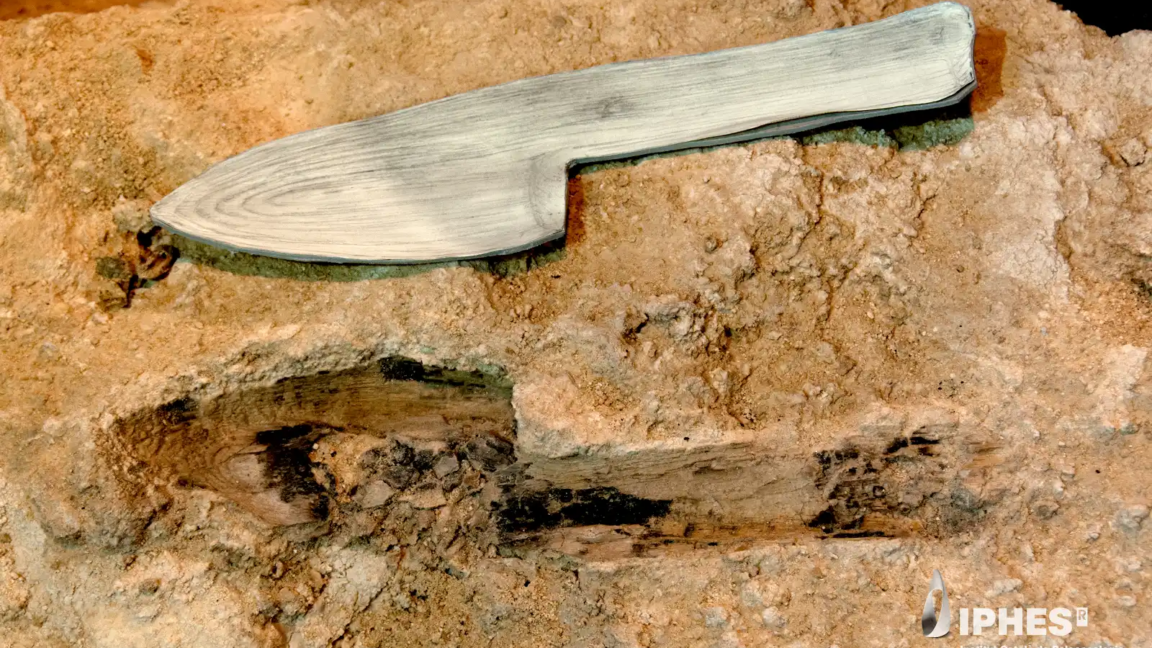
Anthropologists have observed and documented hunter-gatherer groups over the last couple of centuries and found they used similar clubs to kill game at close range, for fighting, and sometimes as symbols of social standing. “But when it comes to this club it’s true that we are not sure,” Chacón admits. The club was found in a living area, next to bones, stone tools, and a hearth, so the team hypothesizes it has been used for everyday work rather than ceremony.
The choice of materials suggests Neanderthals knew their wood. Scots pine is easy to work and dries quickly, so tools were cheap to make and replace. Juniper’s fibrous bark suited the trays. Firewood tended to be dry wood, while tools were made from fresh wood. “When they went to look for wood, it was like when they went to look for stone; they knew exactly what they wanted to make,” says Chacón. “This implies not only planning, but a bit of complexity in the brain to organize your activities.”
That fits a broader shift, as evidence has piled up that Neanderthals twisted fibers into cord, made symbolic objects, and interbred with our species. “Neanderthals are no longer perceived as Homo sapiens ’ dumb cousins,” Chacón says. She suggested that the Abric Romaní tools may offer a new perspective to interpret finds at other sites.
“To study all these types of tools properly, you need a lot of time and budget,” Chacón says. Neanderthal tools from Abric Romaní were first described in the 1990s, so it took decades for the team to identify and catalog them. This makes her concerned that insufficient time and funds might have cost us missing similar discoveries elsewhere. “I hear from colleagues telling me ‘perhaps we found something that we thought was wood, we excavated it, we took pictures, but we didn’t keep it,’” she says. “Now they say perhaps it could be a tool.”
Science Advances, 2026. DOI: 10.1126/sciadv.aeh2287