RimWorld switches engine from Unity to the devs' own, faster Waylith Engine, all apparently without breaking mods somehow
No other outlet followed by Zonactu reports this story yet.
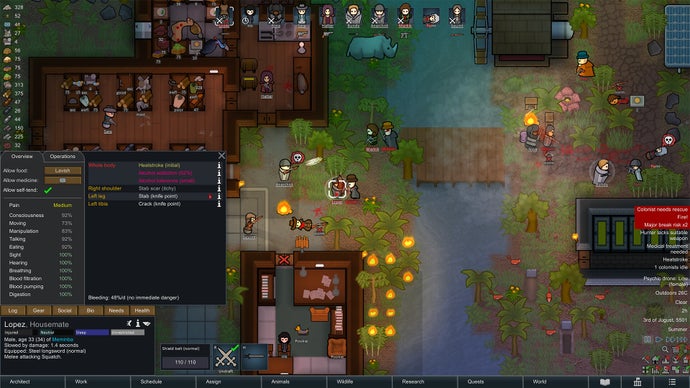
Ludeon Studios, developers of sci-fi colony construction sim RimWorld , have announced in a Steam update that the game will be moving over from Unity to the studio's own in-house Waylith Engine in its upcoming update 1.7. Ludeon states that the game will "look and play exactly the same", but performance will see an improvement of around 2-4x.
Update 1.7 on Waylith promises "faster startup time, game load time with big mod lists, map generation, world generation, general ticks-per-second, and just about everything else", with an example given that "a modpack with 1500 mods went from 14 minutes to 6 minutes to load." While this would be a pretty major improvement in itself, the simple fact that community mods still work after an engine switch is what really impresses and slightly confounds me here. Ludeon notes that some may appear as "potentially unsupported" due to the version changing, but will still function just the same. Saves also can be carried over from 1.6 to 1.7, meaning there'll be no loss of progress just for updating.
The update is currently available to test through Steam's beta branch if players and/or modders wish to give it a shot before its official release. Going by comments on the announcement's Reddit thread, it seems that the update does mostly function as stated, with users reporting improved performance and mods still working, though some note that their RAM usage has notably increased with the new update. The announcement does mention that "if your PC is more than 10 years old, 1.7 may not run on it", so some players may be soon to discover their hardware might not be up to snuff for this — unfortunate time to find out!
This announcement recalls a similar thing happening a few years ago with Slay the Spire 2 , in which developer Mega Crit switched over from Unity to Godot, following Unity's attempt to introduce a per-installation fee for developers that used it (a plainly terrible plan that was later reversed). The more indies that can free themselves from commercial engine software, the better.